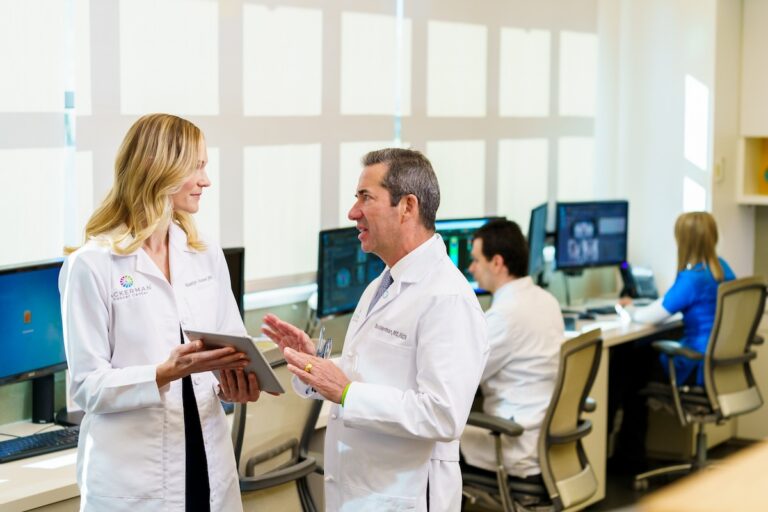
The Positive Power of Protons

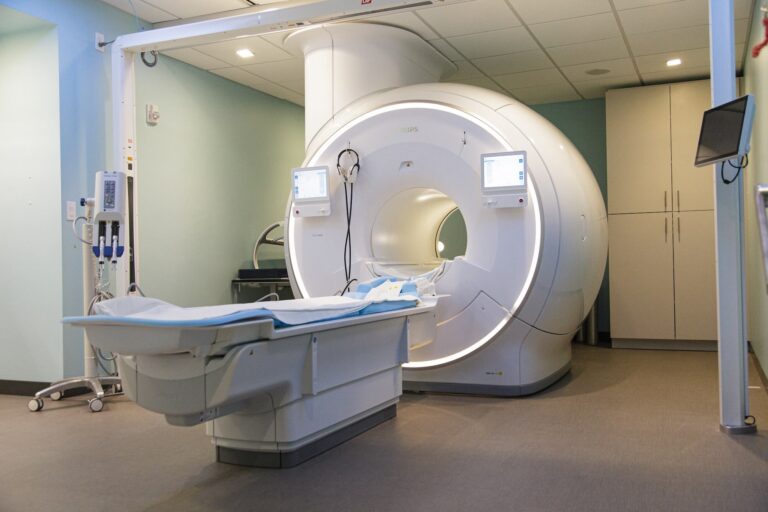
Radiation therapy is a major cancer therapy that can be used alone, with surgery, and/or chemotherapy to cure localized cancers. Proton therapy is one of the most advanced forms of radiation therapy. Ackerman Cancer Center is 1 of only around 30 centers in the United States that uses this specialized form of cancer treatment.

In 1919, while working in Manchester, England, Ernest Rutherford discovered that using alpha particles from a radioactive source to blast the nucleus of certain elements, such as nitrogen gas, led to the disintegration of the nucleus and the emission of ‘fast protons’. Since this discovery over 100 years ago, we have come a long way in the application. We are fortunate to have this specialized form of cancer treatment here in our community at Ackerman Cancer Center. I was fortunate to have had the opportunity to complete my Fellowship training in this advanced modality.

Proton beam therapy is a highly targeted form of radiation therapy that uses protons instead of photons (or x-rays) to target a tumor with precision. A proton beam can deposit the majority of its energy at depth. In treatments using this technology, a proton beam is designed to come to a stop immediately after it deposits the majority of the dose directly at the tumor site. This reduces damage to surrounding tissue and minimizes side effects for patients. This is extremely important when treating tumors close to critical structures such as the brain, eyes, spinal cord, heart, lungs, kidneys, bowel, etc. This enables elimination of the exit dose of radiation, spares critical structures, and decreases total radiation exposure. This overall decrease in radiation dose translates into fewer secondary cancer risks from radiation exposure. An advantage of a decrease in radiation dose to surrounding normal tissue leads to a decrease in the immediate and late effects of treatment. As a result, this causes a more tolerable treatment which in turn helps in completing the course of treatment.

2 Key Benefits of Proton Therapy Include:

  1. Enabling a higher dose of radiation to the tumor/cancer while keeping the dose to adjacent organs constant.
  2. Enabling less toxicity by keeping the dose to adjacent vital organs at its lowest.

Cancers are varied and differ in their biology and behavior. We have studied the behavior of cancer for decades now and understand that some cancers require a higher dose of radiation for eradication whereas some may require lower doses. As we cure more and more cancers and see patients survive longer, we must reduce the side effects of cancer treatments. Proton therapy helps us achieve both of these critical goals of eradicating cancer and improving survivorship. Let me elaborate on this with a few specific examples of some situations where we use proton therapy.

Brain and Spinal Cord Tumors – The brain is a compact structure that controls vital body functions. Precision in treatment is of the essence. The ability to use proton therapy is particularly important when tumors are near the eyes, the base of the skull where we see important cranial nerves traverse, and structures like the brain stem, etc. Not only can we treat malignant tumors of the brain, but also some benign tumors that may not be amenable to surgical removal. This is true not only of tumors that originate in the central nervous system but also of soft tissue sarcomas in close relation to the spinal cord.

Breast Cancer- The treatment of breast cancer is becoming hugely successful due to advanced and sophisticated screening methods like contrast-enhanced mammography and extensive research and collaboration between cancer treatment teams. Radiation is an essential modality in the treatment of breast cancer and is used to target breast tissue in patients who undergo lumpectomies, chest walls in patients treated with mastectomy, and the lymph node regions when at risk. Radiation dose to the lungs can be significantly decreased by using proton therapy. In left-sided breast cancer, protecting the heart is essential. As screening improves and our pick-up of early breast cancer improves, women can live longer. Heart disease is an important cause of morbidity and mortality with age. Studies have shown that exposure to each 1 Gy of radiation increases the risk of coronary artery disease by 7%. Proton therapy offers the promise of negligible doses to the heart making it prudent to use this modality in such cases.

Prostate cancer-  1 in 8 men are diagnosed with prostate cancer in their lifetime. It is the second leading cause of death in men, after lung cancer. Early detection is possible with screening and treatments are extremely effective. This means that we can detect this early and treat it effectively and cause a significant positive impact on the men’s health and cancer burden in the world. Proton therapy is a non-invasive, effective, and valuable treatment as it leads to successful outcomes with vastly lesser side effects both during treatment and in the long run.

Head and Neck Cancer-  Head and neck cancers, although usually curable, usually are at the cost of tremendous adverse effects both from cancer itself and also from treatment. Head and neck cancers are of several different types depending on the site of origin. Generally speaking, radiation is an essential modality of treatment and is sometimes used with concurrent chemotherapy or after extensively debilitating surgery. In these cases, reducing the effects of treatment is critical. A large number of patients may require the placement of a feeding tube during treatment. It has been proven that this can be reduced with the use of proton therapy. There is also evidence that treatment with proton therapy helps improve the tolerability of this intense treatment.

Lung Cancer-  Early lung cancer treatment with radiation alone has been extremely successful, as has treatment of more locally advanced lung cancer with radiation and concurrent chemotherapy. Sparing adjacent normal lung tissue is critical in these patients and is easily achieved with proton therapy. In a patient receiving both chemo and radiation, treatment effects can be severe leading to difficulty in completing the course of treatment. In such cases, proton therapy is extremely beneficial, and we have seen improved tolerability and thus compliance. The spinal cord, esophagus, heart, and in some cases the liver, are other vital organs that can be spared with the use of proton therapy.

Lymphoma – Treatment of lymphoma depends on the specific type and there are far too many kinds of lymphoma. Lymphomas tend to respond extremely well to radiation therapy and thus are used often. As lymphomas are extremely sensitive to radiation, the dose of radiation required is usually much less than with most other cancers. We see many young patients with lymphoma who can be cured with successful multi-modality treatment such as the sequential use of chemotherapy and radiotherapy. It is again important to limit the overall dose of radiation in such patients. Lymphatics can be found almost anywhere in our bodies, and so can lymphoma. Proton beam therapy can thus be used to overcome the proximity to vital organs.

The above are only a few examples of the use of proton therapy. There are several other cancers where protons can offer the promise of a positive outcome such as pancreatic cancer, eye tumors, rectal cancer, liver cancer, gynecological cancer, bladder cancer, soft tissue, and bone sarcomas.
Share:

More Posts

Categories
Headshot Arlean Marcellus

Arlean Marcellus, BS

Physician Liaison

Arlean Marcellus joined Ackerman Cancer Center in March 2023 and leads physician outreach. She builds and strengthens meaningful partnerships with referring physicians, healthcare facilities, and medical groups, driving growth in patient referrals. Arlean holds a degree in Health Science with a concentration in Public Health from the University of North Florida. Beyond her work, she volunteers with Feeding Northeast Florida. In her free time, Arlean enjoys running, roller skating, and spending time with her family.
Headshot Shelby Goodman

Shelby Goodman, MSW

Oncology Social Worker

Shelby Goodman joined the Ackerman Cancer Center team in January 2023 as the oncology social worker. She earned her bachelor’s and master’s degrees in social work from the University of North Florida and went on to become a licensed clinical social worker (LCSW). With over five years of experience supporting individuals and families in the social work field, her practice focuses on psychosocial support, care coordination, and advocacy to enhance the quality of life for patients and their loved ones. Shelby is a member of the Florida Society of Oncology Social Workers (FSOSW). In her free time, she enjoys reading and spending time with her family and dog.
Headshot Kali Molter

Kali Molter, MBA

Community Relations Specialist

Kali Molter joined Ackerman Cancer Center in August 2024 and supports community outreach, marketing initiatives, and engagement efforts. She holds both a Master of Business Administration and a Bachelor of Business Administration in marketing from the University of North Florida. A Jacksonville native and Bishop Kenny alum, Kali is passionate about contributing to and strengthening the local community. She brings experience in hospitality and event management and serves on the Jacksonville Chamber’s NEXTUP JAX Professional Development and Community Engagement committees. Outside of work, Kali enjoys living at the beach, running and yoga, traveling, and is a lifelong Jacksonville Jaguars fan.

Ceilidgh O'Brien, BS

Patient Relations Manager

Ceilidgh O’Brien is the patient relations manager at Ackerman Cancer Center, where she leads the patient relations team and helps ensure every patient experience is organized, supportive, and welcoming. She oversees scheduling and communications and is passionate about creating efficient processes that help patients and staff feel informed, supported, and cared for. Ceilidgh earned a Bachelor of Science in health sciences from the University of South Florida in 2024 and values building strong, compassionate connections with both patients and colleagues. A Boston native, Ceilidgh traded snow for sunshine and now spends her free time running with friends and supporting the Jacksonville Humane Society.
Headshot Tiffany Vaughn

Tiffany Vaughn, RT (R)(T)

Manager, Radiation Therapy & Imaging

Tiffany Vaughn brings extensive experience and steady leadership to Ackerman Cancer Center, with 24 years of service to the practice. For the past 15 years, she has served in leadership roles, overseeing both radiation therapy and imaging departments with a focus on quality care, collaboration, and operational excellence. Tiffany is a proud member of the American Society of Radiologic Technologists and the American Registry of Radiologic Technologists. She earned her technologist degree from St. Vincent's Medical Center and completed radiation therapy training from Washburn University. Outside of work, Tiffany enjoys spending time with her family, relaxing in or around the water, and taking on hands-on projects around her home.
Vivienne Burnett Headshot

Vivienne Bennett, MS, RT(R)(M)​

Clinic Manager

Vivienne Bennett joined Ackerman Cancer Center in November 2013 as a mammography technologist and was promoted in 2021 to oncology clinic manager, overseeing clinical operations across all four locations. She provides leadership for daily clinic operations, supports multidisciplinary oncology teams, ensures regulatory and accreditation compliance, and implements operational strategies to improve quality, safety, and patient experience. Vivienne holds a master’s degree in medical radiation sciences from the University of Sydney in Australia and is a member of the American Registry of Radiologic Technologists (ARRT). Outside of work, she enjoys watching sports, walking, and spending time with friends and family.
Headshot Timothy Scott

Timothy Scott, RTR, RTT, CMD

Manager, Dosimetry, Facilities, & Research

Tim Scott joined Ackerman Cancer Center in 2003 and brings nearly 40 years of experience in radiation oncology and medical dosimetry operations. He oversees medical dosimetry, facilities, special projects, and research and has played a key role in nearly every building project and major technology launch at the center. Tim is passionate about innovation and the development, construction, and commissioning of advanced treatment technologies, including proton therapy. Beyond his professional work, Tim serves as a worship pastor and is a brass musician. In his free time, he enjoys restoring classic cars and spending time on the lake.
Headshot Grigoriy Sarkisov

Greg Sarkisov, BS

Director of Information Technology

Greg Sarkisov joined Ackerman Cancer Center in September 2019 and oversees all facets of information technology and information security within the organization. Greg has over twenty years of experience in information technology and security. With over six of those years in our practice, he has led initiatives to strengthen our core security and expand the use of various technologies to help aid our staff in providing effective and efficient patient care. Greg holds a Bachelor of Science degree in information systems security from ITT Technical Institute. Outside of work, he stays active in the community and is a member of the IT Council with the Jacksonville Chamber of Commerce. In his free time, Greg enjoys spending time with his family and friends.
Headshot Jennifer Zelaya

Jennifer Zelaya, MHA

Director of Human Resources

Jenny Zelaya is the director of human resources at Ackerman Cancer Center and Ackerman Urology, where she oversees all HR functions and fosters a positive, inclusive workplace culture. She holds a master’s degree in health administration from the University of Miami and brings extensive experience in talent management, employee engagement, and regulatory compliance. Fluent in Spanish, Jennifer enjoys staying active outside of work, playing pickleball, golfing with friends and family, and spending time with her golden retriever, Lenny.
Headshot Amy Mousa

Amy Mousa, CPA

Director of Finance and Accounting

Amy Mousa joined Ackerman Cancer Center in November 2021 and serves as the director of finance and accounting. In her role, she oversees financial operations and supports the organization’s strategic and operational goals. Amy holds a Florida CPA license and earned her Bachelor of Business Administration in accounting from the University of North Florida. Outside of work, she enjoys staying active, traveling, and spending quality time with her family.
Headshot Nelson Miksys

Nelson Miksys, PhD, MCCPM

Chief Medical Physicist

Nelson Miksys joined Ackerman Cancer Center in October 2019. As chief medical physicist, Nelson manages the medical physics department, which is responsible for
quality assurance of all patient treatment plans, calibration of the radiation therapy equipment, maintenance of the radiation safety program, integration of new technology
into the clinic, and providing clinical technical support across all aspects of the cancer center. Nelson has over ten years of experience as a medical physicist and comes to Ackerman Cancer Center from The Ottawa Hospital Cancer Centre (Ottawa, Canada). Nelson has a PhD in medical physics from Carleton University (Ottawa, Canada) and a
master’s degree in medical and health physics from McMaster University (Hamilton,
Canada). Outside of work, Nelson is actively involved in his children’s sports activities and community social events and is passionate about maintaining a healthy lifestyle through regular physical fitness and outdoor activities.

Headshot Robert Tokarz

Robert Tokarz, MS, DABR

Vice President, Technical Services

Rob Tokarz joined Ackerman Cancer Center in January 2014 and oversees the Physics, Dosimetry, Therapy, Imaging, IT, and Transcription departments. He holds a Bachelor of Science in physics from Notre Dame and a Master of Science in medical physics from Columbia University. Rob has worked in the field of medical physics for 25 years and has worked previously at Memorial Sloan Kettering Cancer Center. Prior to his career in medical physics, Rob was an officer in the United States Navy, where he attained the rank of lieutenant commander. As a naval aviator, he flew Seahawk
helicopters out of Naval Station Mayport and was stationed overseas in Bahrain.

Headshot Gigi Ackerman Schwartz

Gigi Ackerman Schwartz, MBA

Vice President, Operations

Gigi Ackerman Schwartz joined Ackerman Cancer Center in November 2020 and leads strategic planning initiatives across all departments, directs all aspects of revenue cycle management, and works to develop and maintain relationships with community partners. Gigi holds an MBA from Tulane University. A Jacksonville native, she is involved in several local charitable and civic organizations. She serves as chair of the Art in Public Places Committee for the Cultural Council of Greater Jacksonville, is a member of the National Young Leadership Cabinet, and is a trustee of the Jewish Community Alliance and Jacksonville Jewish Center. In her free time, Gigi enjoys playing mahjong, exploring new hobbies with friends, and spending time with her husband and two-year-old daughter.

SEARCH

Find information about cancer care, conditions we treat, our care providers, events, general wellness, and more.

Headshot Baylee Richter

Baylee Richter, BS

Community Relations Manager

Baylee Richter joined Ackerman Cancer Center in November 2024 and oversees digital campaigns, brand strategy, and community outreach and engagement. With more than eight years of experience in events and marketing, she has led initiatives that strengthen patient engagement, community awareness, and referral growth. Baylee holds a Bachelor of Science in hospitality and tourism management from Slippery Rock University of Pennsylvania. Outside of work, she stays actively involved in the community through her service on the board of the American Lung Association. She also supports the American Cancer Society’s Cowford Ball as a member of the children’s art project committee and contributes to the Jacksonville Chamber’s NEXTUP JAX program, serving on two committees. In her free time, Baylee enjoys spending time with her Australian Shepherd, Cooper, and cheering on the Pittsburgh Steelers.