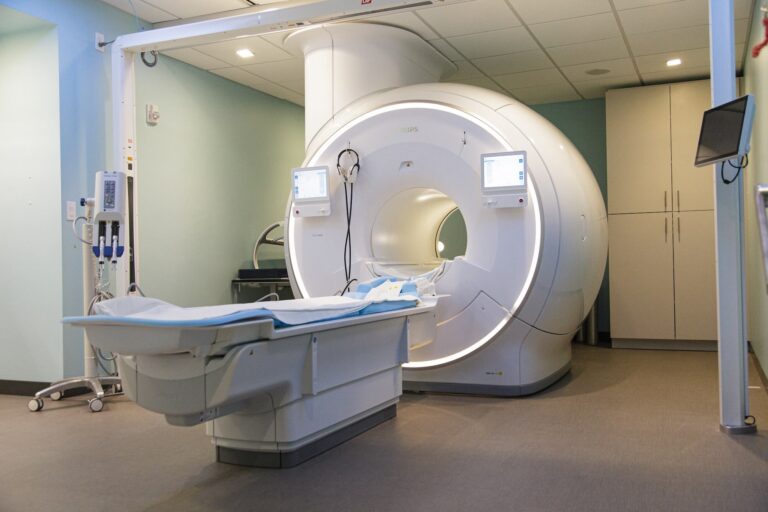
What Is Proton Therapy for Prostate Cancer?
Proton therapy is an advanced form of radiation treatment that uses proton beams which are positively charged subatomic particles to deliver targeted radiation directly to the prostate tumor. Unlike conventional X-ray radiation (photon therapy), which deposits radiation along its entire path through the body entering through healthy tissue, passing through the tumor, and continuing to exit through additional healthy tissue on the other side, proton beams take advantage of a unique physical property known as the Bragg peak.
The Bragg peak is what makes proton therapy fundamentally different from other traditional radiation approaches. A proton beam deposits a low dose of radiation as it enters the body, then releases the majority of its energy at a precise, predetermined depth (the tumor) and stops. There is virtually no exit dose beyond the target. This means that the organs surrounding the prostate, particularly the bladder and rectum, can receive significantly less radiation exposure compared to conventional techniques.
For prostate cancer patients, this precision matters. The prostate sits directly in front of the rectum and immediately below the bladder. Reducing radiation exposure to these adjacent structures translates to a lower risk of urinary, bowel, and sexual side effects both during treatment and in the years that follow. Proton therapy delivers radiation directly to the tumor while sparing the healthy tissue that patients depend on for quality of life.
How Proton Therapy Compares to Other Treatments
Proton Therapy vs IMRT, SBRT, and Surgery
When diagnosed with localized prostate cancer, patients typically have several treatment options. Each approach has strengths and trade-offs, and the right choice depends on the cancer’s stage and grade, the patient’s age and health, and the patient’s priorities regarding side effects and recovery.
Treatment | Invasiveness | Precision | Side Effects | Recovery |
|---|---|---|---|---|
Radical Prostatectomy (Surgery) | High — major surgery under general anesthesia | High — removes the entire prostate | Higher risk of urinary incontinence and erectile dysfunction | 4–6 weeks; catheter required for 1–2 weeks |
IMRT (Intensity-Modulated Radiation Therapy) | Low — non-invasive, outpatient | Moderate — shapes radiation beams but delivers exit dose | Moderate — bladder and rectal irritation common during and after treatment | Minimal — resume normal activities during treatment |
SBRT (Stereotactic Body Radiation Therapy) | Low — non-invasive, outpatient | High — delivers large doses in 5 sessions | Moderate — concentrated doses may increase short-term urinary and bowel symptoms | Minimal — 5 treatments over 1–2 weeks |
Proton Therapy | Low — non-invasive, outpatient | Very High — Bragg peak eliminates exit dose | Lower — reduced radiation to bladder and rectum may decrease urinary, bowel, and sexual side effects | Minimal — resume normal activities during treatment |
Proton therapy’s key advantage is its ability to match or exceed the cancer control rates of IMRT and SBRT while delivering significantly less radiation to the bladder and rectum. A 2023 analysis published in JAMA Oncology found that proton therapy for prostate cancer resulted in lower rates of genitourinary and gastrointestinal toxicity compared to IMRT, with comparable biochemical recurrence-free survival. For patients who prioritize preserving quality of life, this difference is clinically meaningful.
Current Trends in Prostate Cancer Radiation Therapy
The field of prostate cancer radiation therapy is evolving rapidly. Several trends are reshaping how treatment is planned, delivered, and optimized:
1. Hypofractionation & SBRT
The shift toward delivering higher doses of radiation in fewer treatment sessions has been one of the most significant changes in prostate cancer radiation therapy over the past decade. Traditional prostate radiation schedules involved up to 45 treatments over eight to nine weeks. Recently, moderate hypofractionation (typically 20 to 28 treatments) has become more common, and ultra-hypofractionation using SBRT (5 or fewer treatments) is gaining rapid adoption.
The PACE-B and HYPO-RT-PC randomized trials have demonstrated that hypofractionated schedules achieve equivalent cancer control with comparable or reduced toxicity and dramatically improved convenience for patients. Major guidelines from ASTRO, NCCN, and AUA now support hypofractionated regimens for low- and intermediate-risk prostate cancer.
2. Image-Guided Radiation Therapy (IGRT)
Daily imaging before each treatment session ensures that radiation is delivered to the exact intended target inside the body, even when the prostate shifts position due to bladder filling, rectal gas, or normal physiologic movement. Modern IGRT techniques including cone-beam CT, fiducial markers, and electromagnetic transponder tracking (such as Calypso) allow the treatment team to verify and correct the patient’s position in real time before each fraction is delivered.
IGRT is essential for the tight dose margins that proton therapy and SBRT demand. Without daily image guidance, the precision offered by advanced treatment techniques would be lost to anatomical uncertainty.
3 Adaptive Radiation Therapy (AI-Driven Planning)
Adaptive radiation therapy takes image guidance a step further. Rather than repositioning the patient based on the internal anatomy, adaptive therapy uses AI-assisted software to modify the treatment plan itself based on daily imaging and daily anatomical variations. The prostate, bladder, and rectum change in size and position from day to day and adaptive therapy adjusts dose distributions to account for these changes.
This approach is still emerging for proton therapy, but early clinical experience suggests it can further reduce dose to normal structures and improve treatment accuracy. As AI-driven planning tools mature, adaptive proton therapy is expected to become an increasingly standard part of treatment delivery.
Clinical Outcomes and Effectiveness
Proton therapy for prostate cancer has been studied extensively, with outcomes data spanning more than two decades. The clinical evidence consistently demonstrates that proton therapy achieves cancer control rates comparable to the best photon-based techniques with the potential for reduced side effects due to lower integral dose to normal tissues.
Key evidence includes:
- Five-year biochemical recurrence-free survival rates of 90% to 97% for low- and intermediate-risk prostate cancer, consistent with outcomes from IMRT and SBRT
- Reduced genitourinary and gastrointestinal toxicity compared to IMRT in multiple comparative analyses, including the 2023 JAMA Oncology study demonstrating lower rates of urinary and bowel complications
- The PARTIQoL trial (Proton Therapy vs. IMRT for Low or Intermediate Risk Prostate Cancer) — a randomized phase III trial — completed enrollment and is expected to provide the highest level of evidence comparing patient-reported quality of life outcomes between the two modalities
- The COMPPARE trial (Protons vs. Photons for Prostate Cancer) continues to enroll patients, comparing clinical outcomes and patient-reported outcomes across proton and photon treatment approaches
Studies also show that proton therapy may be particularly beneficial for patients with pre-existing urinary or bowel conditions, younger patients who will live with treatment effects for decades, and patients receiving concurrent androgen deprivation therapy (ADT) where minimizing additional toxicity is important.
Benefits of Proton Therapy for Prostate Cancer
- Precision targeting: The Bragg peak delivers maximum dose to the prostate and stops, meaning no exit dose through the rectum, bladder, or pelvic structures
- Reduced radiation to surrounding organs: Studies show 50% to 60% less radiation to the bladder and rectum compared to IMRT
- Lower risk of side effects: Reduced dose to normal tissues translates to lower risks of urinary incontinence, rectal bleeding, bowel urgency, and sexual dysfunction
- Non-invasive treatment: No surgery, no anesthesia, no incisions, no catheter, no hospital stay
- Maintains quality of life: Most patients continue working, exercising, and living normally throughout treatment
- Long-term safety profile: Lower integral radiation dose means less radiation to the pelvis overall, potentially reducing the risk of secondary cancers in the decades after treatment
Limitations and Considerations
- Cost: Proton therapy is generally more expensive than IMRT or SBRT, though insurance coverage has expanded significantly. Most major insurers now cover proton therapy for prostate cancer, and Ackerman Cancer Center accepts 99% of all insurance plans.
- Availability: Proton therapy centers are less common than traditional radiation facilities due to the specialized technology and cost involved. There are now more than 45 centers nationwide, including three in Jacksonville, UF Health (celebrating 20 years), Ackerman Cancer Center (celebrating 11 years), and the newly opened Mayo Clinic facility.
- Treatment duration: Standard proton therapy courses involve 32-45 treatments over six to nine weeks. Ackerman Cancer Center is the only facility in the United States to offer treatments on Saturdays to decrease the overall treatment times.
- Ongoing comparative research: While comparative data strongly supports proton therapy’s dosimetric advantages and toxicity benefits, randomized trial data (PARTIQoL, COMPPARE) is still maturing. Current evidence from large retrospective and prospective studies consistently favors proton therapy for reduced side effects with equivalent cancer control.
Who Is a Candidate for Proton Therapy?
Proton therapy is an excellent option for many prostate cancer patients, including:
- Localized prostate cancer (low, intermediate, or high-risk) — the most common indication
- Recurrent prostate cancer — patients who have experienced biochemical recurrence after surgery (salvage radiation) may benefit from the precision of protons to limit toxicity during re-treatment of the prostate bed
- Patients seeking a non-invasive alternative to surgery — proton therapy offers definitive cancer treatment without the risks and recovery of radical prostatectomy
- Younger patients — men diagnosed in their 50s or 60s who will live with treatment effects for 20 to 30+ years benefit from the lower long-term toxicity profile of protons
- Patients with pre-existing urinary or bowel conditions — minimizing additional radiation to already-compromised organs is especially important
Many patients who are candidates for IMRT or SBRT are also candidates for proton therapy. A consultation with a radiation oncologist can help determine which approach best aligns with your cancer profile, anatomy, and personal priorities.
What to Expect During Proton Therapy Treatment
- Consultation: You will meet with a board-certified radiation oncologist who will review your biopsy results, PSA history, imaging (MRI, PET and/or CT), Gleason score, and overall health. Together, you will discuss treatment options and determine whether proton therapy is appropriate for your case.
- Treatment planning: A CT simulation (and often an MRI) is performed to create detailed images of your prostate and surrounding anatomy. Our dosimetry and physics team uses these images to design a customized treatment plan, optimizing dose to the prostate while minimizing exposure to the bladder, rectum, and other structures. Fiducial markers (small gold seeds) may be placed in the prostate to enable daily image-guided positioning. The advanced BioProtect balloon spacer may also be recommended to create additional separation between the prostate and rectum, further protecting healthy surrounding tissue.
- Daily treatments: Treatment is delivered Monday through Friday (with Saturday as an additional option), typically over four to six weeks (32 to 45 sessions) for standard fractionation. Each session takes approximately 15 to 20 minutes total, including positioning and imaging. Proton Therapy Treatment is quick, painless, non-invasive, and on-site.
- During treatment: Most patients experience minimal disruption to daily life. You can drive yourself to appointments, continue working, and maintain your regular activities. Some patients experience mild urinary frequency or urgency in the later weeks of treatment, which typically resolves within weeks after completion.
- Follow-up care: After completing treatment, you will have regular follow-up appointments to monitor PSA levels and assess any side effects. PSA testing is typically performed every three to six months for the first several years, then annually. Your radiation oncologist will coordinate follow-up care with your urologist.
Proton Therapy in Northeast Florida
Ackerman Cancer Center was founded by Dr. Scot Ackerman in 1997 and became the world’s first private, physician-owned proton therapy practice with the opening of its proton facility in 2015. The team has treated more than 3,500 patients using proton therapy and has nearly 30 years of experience in delivering precision radiation treatment.
Our proton therapy center is located at our Mandarin campus in Jacksonville, FL, with additional radiation oncology offices at:
- Riverside (Jacksonville, FL)
- Amelia Island, FL
- St. Augustine, FL (World Golf Village area)
Our radiation oncologists have extensive experience treating prostate cancer with proton therapy using advanced pencil beam scanning technology. From initial consultation through treatment completion and long-term follow-up, every aspect of your care is managed by a team that specializes in precision radiation oncology.
Frequently Asked Questions (FAQs)
How many treatments are needed for proton therapy?
The number of treatments depends on the fractionation schedule your radiation oncologist recommends. Standard fractionation involves 32 to 45 treatments over six to nine weeks. Your radiation oncologist will recommend the schedule that is most appropriate for your cancer stage, risk level, and individual factors.
Is proton therapy safe?
Yes. Proton therapy is FDA-cleared and has been used to treat cancer for over 30 years in the United States. Tens of thousands of patients have been treated with proton therapy worldwide and over 3,500 have been treated at Ackerman Cancer Center. The Bragg peak property of protons allows radiation to be delivered with less exposure to surrounding healthy tissue compared to conventional radiation — which translates to a favorable safety and side effect profile. As with any radiation treatment, some patients may experience temporary urinary or bowel symptoms, but these are generally mild and resolve after treatment completion.
Who is a good candidate for proton therapy?
Patients with localized prostate cancer (low, intermediate, or high-risk), patients with recurrent disease after surgery, younger patients who will live with treatment effects for decades, and patients with pre-existing urinary or bowel conditions are all strong candidates for proton therapy. Most patients who qualify for conventional external beam radiation (IMRT or SBRT) are also candidates for proton therapy. A consultation with a radiation oncologist is the best way to determine whether proton therapy is right for your specific situation.
Does proton therapy improve survival rates?
Proton therapy achieves cancer control rates comparable to the best conventional radiation techniques, with five-year biochemical recurrence-free survival rates of 90% to 97% for localized prostate cancer. The primary advantage of proton therapy is not in improving cancer cure rates, which are already excellent with modern radiation techniques, but in achieving those same cure rates while reducing side effects and preserving quality of life. For many patients, the quality-of-life benefits are the most meaningful consideration when choosing between treatment options.
Where can I get proton therapy in Northeast Florida?
Ackerman Cancer Center provides proton therapy for prostate cancer at our Mandarin campus in Jacksonville, FL, with radiation oncology consultations available at our Riverside (Jacksonville), Amelia Island, and St. Augustine (World Golf Village) offices. Our team has treated over 3,500 patients with proton therapy since 1997. Call (904) 880-5522 or schedule a consultation to discuss whether proton therapy is the right option for your prostate cancer.
Contact Us Today
Proton therapy represents the cutting edge of prostate cancer treatment — delivering precise, targeted radiation that spares the healthy tissue surrounding your prostate while achieving excellent cancer control. As techniques like pencil beam scanning, hypofractionation, and adaptive planning continue to advance, the benefits of proton therapy are only growing.
If you or a loved one has been diagnosed with prostate cancer, take the next step:
- Schedule a consultation with a board-certified radiation oncologist to discuss whether proton therapy is right for you
- Speak with our team about your diagnosis, treatment options, and what to expect
- Learn if you’re a candidate — call (904) 880-5522 to get started