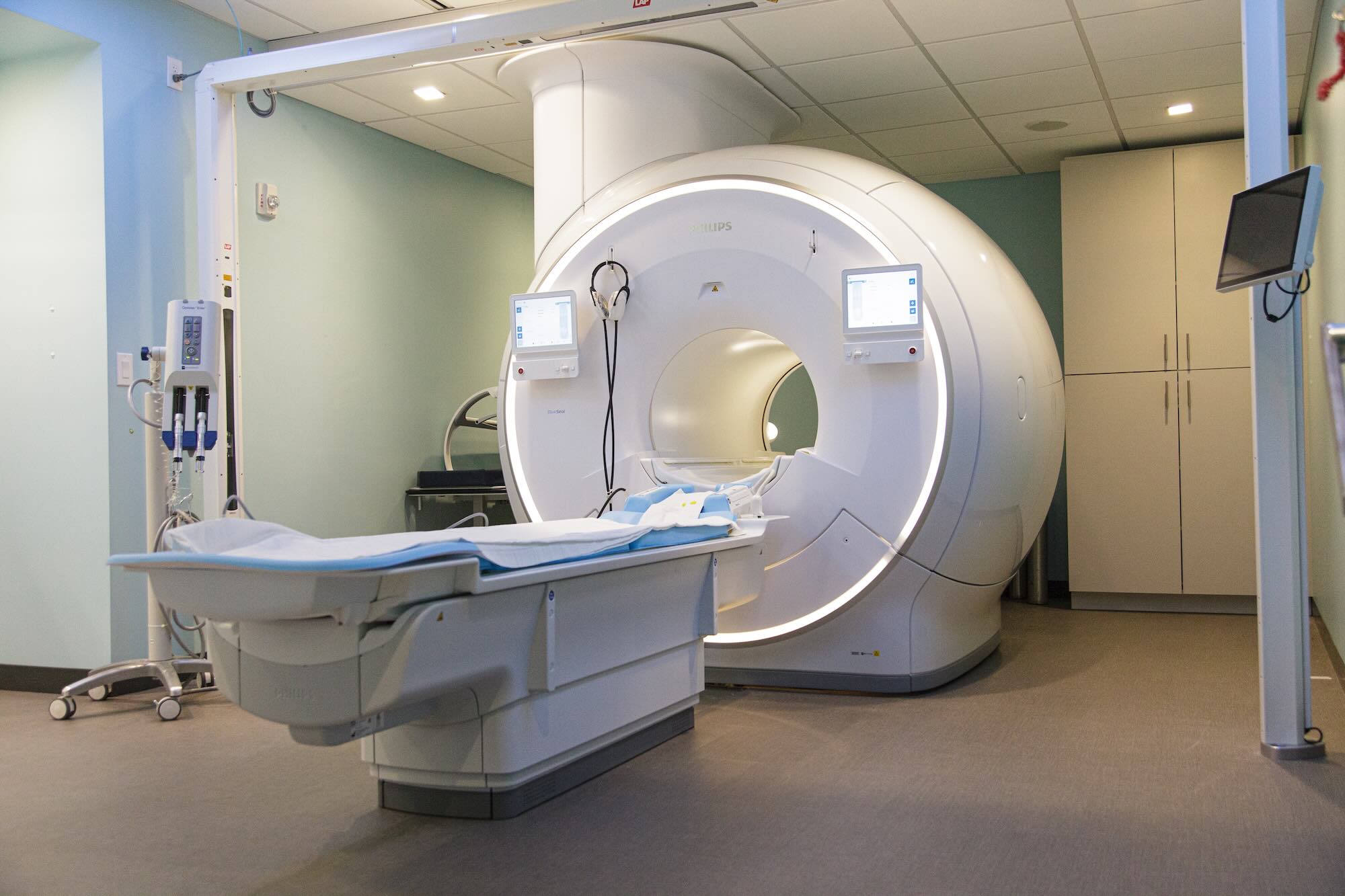
If you are healthy and proactive about your health, a total body MRI in Jacksonville may be on your radar as a preventive screening option. This scan uses magnetic imaging to look at your body from head to torso in about 90 minutes, with no radiation and no needles. It has become one of the most talked-about screening tools in the country, and for good reason.
This guide is written for health-conscious adults, people with a family history of cancer, and anyone weighing whether whole body imaging is worth the investment. Below, we explain what a total body MRI actually detects, who tends to benefit most, what the experience is like, and where the limits are. Our goal is to help you make an informed, evidence-based decision.
Key Takeaways
- A total body MRI at Ackerman Cancer Center uses a Philips 1.5T Ingenia scanner and can flag more than 500 conditions across the body.
- The scan uses no ionizing radiation, unlike CT scans or X-rays.
- Pricing starts at $2,749, and the service is typically not covered by insurance because it is considered an elective screening.
- Best-fit candidates include adults with a family history of cancer, those wanting a proactive health baseline, and executive-health seekers.
- A total body MRI does NOT replace targeted screenings like mammograms, colonoscopies, or low-dose CT lung scans.
What Is a Total Body MRI?
A total body MRI is a single imaging session that captures detailed pictures of your major organs and soft tissues. MRI stands for magnetic resonance imaging. It uses a strong magnetic field and radio waves, not radiation, to produce cross-sectional images of the inside of your body.
MRI is especially strong at showing soft tissue detail, which makes it useful for viewing the brain, spine, liver, kidneys, and other organs. That soft-tissue clarity is the reason MRI is often chosen when doctors need to look closely at organs that X-rays and standard CT scans cannot show as clearly.
How a Total Body MRI Differs From a Standard MRI
A standard, diagnostic MRI usually focuses on one area, such as a knee or the lumbar spine, because a doctor is investigating a specific symptom to either diagnose or rule out a certain condition. A total body MRI is a screening scan. It covers a broad region, typically from the top of the head down to torso, in one appointment.
At Ackerman Cancer Center, the scan runs on a Philips 1.5T Ingenia system. The “1.5T” refers to the magnet strength, measured in Tesla units, which balances image quality with patient comfort and scan speed.
What the Scan Can Detect
A total body MRI can identify a wide range of findings, and the Ackerman scan is designed to flag more than 500 conditions. These can include:
- Certain tumors and suspicious masses in organs
- Aneurysms and some vascular abnormalities
- Cysts, nodules, and lesions
- Signs of organ enlargement or structural change
- Spine and joint degeneration
It is important to understand that “detect” means the scan can reveal something that warrants a closer look. It does not diagnose on its own. Any finding is reviewed by a radiologist and, when needed, followed up with targeted testing.

Who Should Consider a Total Body MRI
A total body MRI is elective, which means it is a personal choice rather than a doctor-ordered test for a known problem. Some people gain more value from it than others.
Strong Candidates
You may be a good candidate if you fall into one of these groups:
- Family history of cancer. If close relatives have had cancer, a baseline scan can offer peace of mind and a reference point for future imaging.
- Proactive, health-focused adults. People who invest in preventive care often want a broad look at their internal health to build a baseline.
- Executive health seekers. Busy professionals value a single, efficient appointment that reviews multiple organ systems at once.
- People with vague or unexplained symptoms. While not a substitute for a diagnostic workup, a broad scan can sometimes help direct next steps.
Who May Not Benefit as Much
A total body MRI is not right for everyone. People with certain implanted medical devices, such as some pacemakers, may not be able to safely undergo an MRI . Individuals who are pregnant should discuss timing with their physician. And if you already have specific symptoms, a targeted diagnostic scan ordered by your doctor is usually the better first step.
The American College of Radiology notes that screening tests work best when matched to a person’s actual risk profile, so a conversation about your history matters before you book.
What to Expect During Your Scan – The Ackerman Advantage
One of the advantages of choosing Ackerman Cancer Center is that the imaging happens inside a center where oncology expertise is part of everyday practice. That context adds value when a radiologist reviews the images.
The Three-Part Experience
Your visit is built around three parts:
- Pre-scan consultation. Before imaging, you meet with a board-certified nurse practitioner to review your medical history and answer questions. This helps set expectations.
- The scan. The imaging session takes about 90 minutes. You lie still on the scanner table while the machine captures images. There are no injections required for the standard screening scan and no radiation exposure.
- Post-scan discussion. After the radiologist reviews your images, you have a follow-up conversation with a nurse practitioner to walk through the findings and any recommended next steps, approximately 2 weeks post scan.
Comparing Screening Options
The table below compares a total body MRI with two common imaging tools so you can see where each fits.
| Feature | Total Body MRI | CT Scan | Standard X-Ray |
|---|---|---|---|
| Uses radiation | No | Yes | Yes |
| Soft tissue detail | Excellent | Good | Limited |
| Typical coverage | Head to torso | Targeted region | Single area |
| Approximate time | ~90 minutes | 10–30 minutes | Minutes |
| Common use | Broad screening | Diagnosis of a known issue | Bones, chest |
Cost, Insurance, and Making the Decision
Because a total body MRI is elective screening rather than a test for a diagnosed condition, insurance generally does not cover the screening. At Ackerman Cancer Center, pricing starts at $2,749, which includes the pre-scan consultation, the roughly 90-minute scan appointment, and the post-scan discussion with a nurse practitioner.
Weighing the Value
The National Cancer Institute emphasizes that no single screening test catches everything, and that the goal of screening is early detection when treatment tends to be most effective. A total body MRI can be a meaningful part of a preventive strategy, but it works best alongside, not instead of, recommended age-based screenings.
For example, you should still follow guidance for mammograms, colonoscopies, and low-dose CT lung screening for eligible patients. To learn more about how these fit together, visit our screening and diagnostic services overview.
Understanding Incidental Findings
One honest point to consider: broad scans sometimes reveal “incidental findings,” meaning something the scan picks up that turns out to be harmless. These can lead to follow-up tests. A good imaging team helps you interpret findings calmly and avoid unnecessary worry, which is one reason the Ackerman post-scan discussion is built into the process.
Frequently Asked Questions
How long does a total body MRI take?
The scan itself takes about 90 minutes. When you include the pre-scan consultation and the post-scan discussion with a nurse practitioner, plan for a longer visit.
Does a total body MRI replace my regular cancer screenings?
No. A total body MRI is a broad screening tool, but it does not replace targeted tests like mammograms, colonoscopies, or low-dose CT lung scans. The National Cancer Institute recommends age-appropriate screenings, and a whole body MRI works best as a complement to them.
How much does a total body MRI cost in Jacksonville?
At Ackerman Cancer Center, a total body MRI starts at $2,749. Because it is elective preventive screening rather than a test for a diagnosed condition, insurance typically does not cover it. The price includes the consultation, scan, and follow-up discussion.
Is a total body MRI safe?
Yes. MRI uses a magnetic field and radio waves rather than radiation, so it does not expose you to ionizing radiation. It is considered very safe for most people. Patients with certain implanted devices should confirm MRI compatibility with the imaging team before scheduling.
Who should get a total body MRI?
Good candidates include adults with a family history of cancer, health-conscious individuals wanting a baseline, and executive-health seekers. If you have specific symptoms, a targeted scan ordered by your physician is usually a better starting point than a broad screening MRI.
Take the Next Step Toward Proactive Health
A total body MRI in Jacksonville offers a broad, radiation-free look at your internal health in about 90 minutes, flagging more than 500 possible conditions for closer review. It is not a replacement for age-based screenings, but for the right person it can be a valuable part of a proactive health plan. The three-part experience at Ackerman Cancer Center, pairing advanced imaging with oncology expertise, is designed to keep you informed at every step.
If you are considering a total body MRI, our team is here to answer your questions and help you decide if it is right for you. Learn more on our Total Body MRI page or contact us to schedule your consultation. Real people answer the phone, and we are happy to help.
Medical disclaimer: This article is for general educational purposes and is not medical advice. A total body MRI is an elective screening and does not diagnose disease on its own. Always consult a qualified physician about screening decisions and any health concerns.