Esophageal cancer is often diagnosed after symptoms like trouble swallowing appear, which is why understanding the disease and its treatment matters so much. Knowing the esophageal cancer treatment options available today can help you and your family make informed decisions during a stressful time.
For people who have been diagnosed with esophageal cancer, those experiencing worrying symptoms, and caregivers researching care in Northeast Florida. It covers warning signs, how the disease is diagnosed, and the role radiation and proton therapy play alongside surgery and chemotherapy. This is educational information and not a replacement for a personalized evaluation.
Medically reviewed by Scot Ackerman, MD, FACR, board certified radiation oncologist
Key Takeaways
- The American Cancer Society estimates about 22,000 new cases of esophageal cancer in the United States each year.
- Difficulty swallowing, unintended weight loss, and chest discomfort are common warning signs.
- Treatment often combines several approaches, including radiation, chemotherapy, and surgery.
- Traditional radiation and proton therapy help shrink tumors before or after surgery, treat inoperable tumors, and relieve swallowing difficulty.
- Proton therapy can reduce dose to the heart and lungs, which sit close to the esophagus.
Understanding Esophageal Cancer
The esophagus is the muscular tube that carries food and liquid from the throat to the stomach. Esophageal cancer begins in the cells that line this tube. The two main types are adenocarcinoma, which usually forms in the lower esophagus and is linked to chronic acid reflux and Barrett’s esophagus, and squamous cell carcinoma, which forms in the upper and middle esophagus.
According to the National Cancer Institute, risk factors include long-term acid reflux, smoking, heavy alcohol use, obesity, and Barrett’s esophagus. Because early esophageal cancer often causes no symptoms, awareness of risk factors and prompt evaluation of swallowing problems are important.
Warning Signs to Discuss With a Physician
- Difficulty or pain when swallowing, especially with solid foods
- Unintended weight loss
- Chest pain, pressure, or burning
- Worsening heartburn or indigestion
- Hoarseness or a chronic cough
- Food coming back up or feeling stuck
These symptoms have many possible causes, but persistent swallowing difficulty should always be evaluated promptly.
How Esophageal Cancer Is Diagnosed
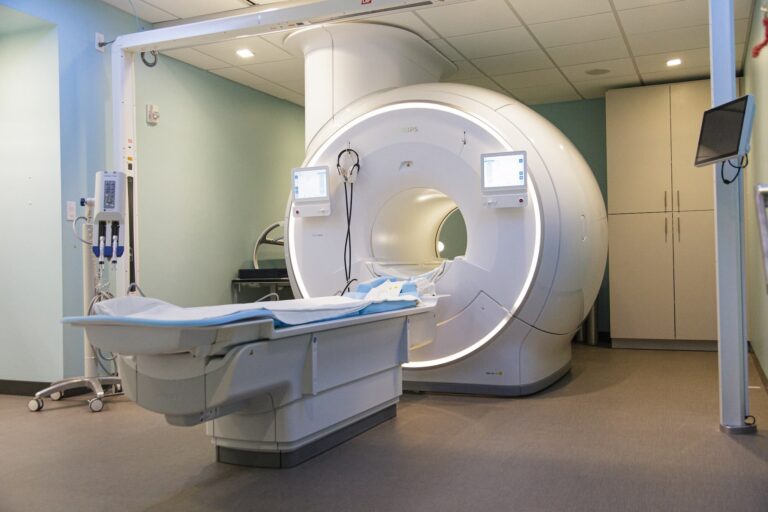
Diagnosis usually begins with an upper endoscopy, in which a thin, lighted tube examines the esophagus and takes a biopsy. Imaging then determines the stage, or extent, of the cancer. This may include PET/CT scanning, which combines functional and anatomic imaging, and endoscopic ultrasound to assess how deeply a tumor has grown.
On-site diagnostic imaging supports fast, coordinated evaluation. You can review available services on the screening and diagnostic services page.
Esophageal Cancer Treatment Options
Esophageal cancer is often treated with more than one method working together. The combination of treatment is determined by the provider based on the tumor type, its stage, its location, and your overall health. You can also review our approach to gastrointestinal cancer treatment.
Combined Treatment Before Surgery
For many patients with locally advanced disease, radiation and chemotherapy are given together before surgery. This approach, sometimes called neoadjuvant chemoradiation, aims to shrink the tumor and improve the chance that surgery removes all of it. Your medical oncologist and radiation oncologist coordinate this plan.
Radiation as a Primary Treatment
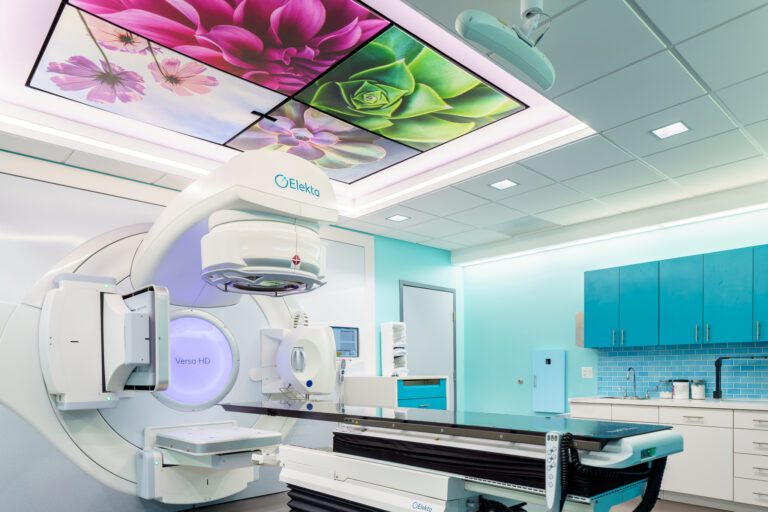
When surgery is not possible because of tumor location or a patient’s overall health, radiation combined with chemotherapy can serve as the main treatment. Precise techniques such as intensity modulated radiation therapy target the tumor while limiting dose to nearby organs.
Proton Therapy for Esophageal Cancer
The esophagus sits near the heart and the lungs, which makes protecting these organs a priority. Proton therapy deposits most of its energy at the tumor and then stops, reducing dose to the heart and lungs beyond the target. For a treatment area this sensitive, that difference can matter.
Ackerman Cancer Center offers proton therapy alongside advanced photon techniques, so physicians can compare the two. Learn more on the what is proton therapy page and the treatment techniques overview.
Palliative Radiation for Swallowing Relief
When the goal is comfort rather than cure, a shorter course of radiation can shrink a tumor enough to ease swallowing and improve quality of life. This is an important option for patients with advanced disease.
Because Ackerman Cancer Center provides all radiation modalities under one roof, physicians can match the technique to the goal, whether that is preparing for surgery, treating an inoperable tumor, or relieving symptoms.
Treatment Approaches at a Glance
| Situation | Common Approach |
|---|---|
| Locally advanced, operable | Chemoradiation before surgery |
| Inoperable tumor | Radiation combined with chemotherapy |
| Sensitive anatomy near heart and lungs | Proton therapy considered |
| Advanced disease, comfort focus | Palliative radiation for swallowing |
Support Throughout Treatment
Esophageal cancer and its treatment can affect eating and nutrition, which makes support services especially valuable. Our oncology specialized social workers guide the care which is described under whole-patient care. Additional programs are listed on the support programs page.
Frequently Asked Questions
What are the main treatment options for esophageal cancer?
The main options are surgery, radiation therapy, and chemotherapy, often used in combination. Many patients receive radiation and chemotherapy together before surgery. When surgery is not possible, radiation combined with chemotherapy can be the primary treatment. Your care team tailors the plan to your stage and health.
Is radiation used for esophageal cancer?
Yes. Radiation is a core part of esophageal cancer care. It can shrink tumors before surgery, treat inoperable tumors alongside chemotherapy, and relieve swallowing difficulty in advanced disease. Precise techniques and proton therapy help protect the nearby heart and lungs.
Why is proton therapy considered for esophageal cancer?
The esophagus lies close to the heart and lungs. Proton therapy stops at the tumor rather than continuing through the body, which can reduce dose to these organs. Whether it is used is determined by your provider based on your tumor and overall health, and it is compared with other techniques during your evaluation.
Can radiation help with trouble swallowing from esophageal cancer?
Yes. When a tumor makes swallowing difficult, a course of radiation can shrink it and ease symptoms, improving comfort and the ability to eat. This palliative use of radiation focuses on quality of life and can be discussed with your radiation oncologist.
Where can I get treatment for esophageal cancer in Jacksonville?
Ackerman Cancer Center in Jacksonville offers radiation therapy and proton therapy for esophageal cancer, along with on-site diagnostics and whole-patient support. To discuss your situation, visit the contact page to schedule a consultation.
Taking the Next Step
Esophageal cancer treatment usually brings together several specialists and several methods, and radiation plays a central role at nearly every stage. Understanding your esophageal cancer treatment options, from chemoradiation before surgery to proton therapy that protects the heart and lungs, can help you feel informed and empowered in your own care.
If you or a loved one has been diagnosed and wants to explore radiation options, contact Ackerman Cancer Center to schedule a consultation.
This article is for general educational purposes and does not constitute medical advice. Every diagnosis is unique. Please consult a qualified physician about your specific situation. Sources include the American Cancer Society and the National Cancer Institute.